- News
- August 18, 2026
Sometimes a holiday simply starts at Shell.
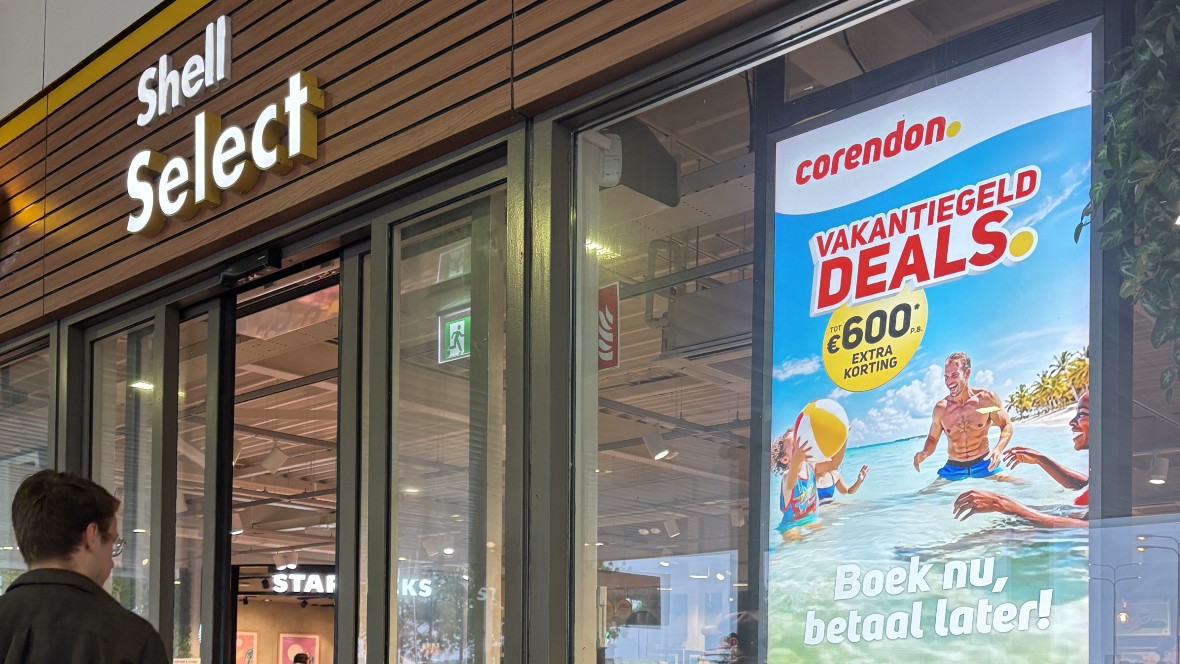
The Corendon campaign at Shell shows that the power of retail media lies not only in reach, but above all in context and in its synergy with the rest of the media mix.
Everyone knows the feeling. After a long day at work, you get out of the car to refuel. Within ten minutes, you are back on the road. But sometimes, that is exactly the moment when your mind starts to wander. To sunshine. To relaxation. To a holiday. Perhaps that is why a holiday sometimes simply starts at Shell. Not the booking itself, that usually happens at home. But the desire often arises while you are on the road, after a busy day at work or on your way to an important appointment. Corendon has been one of the Netherlands’ largest tour operators for many years. Not by following the beaten track, but by making its own choices. Its own aircraft, its own hotels and a strong dose of entrepreneurship form the foundation of that growth. That independent spirit is also reflected in its marketing. Corendon is, for example, a sponsor of the Curaçao national football team. The media attention surrounding its World Cup qualification campaign not only generated additional awareness for Corendon, but also strengthened the association with Curaçao as a holiday destination. A smart combination of brand and destination. Corendon’s main target audience consists of families in which both parents often work and holidays are carefully planned. At the core of Corendon’s business are therefore fully organised package holidays by air for families. That is an important starting point, including when it comes to media planning.
The context
The Netherlands is a country of commuters. Many Corendon customers spend time in the car every day. They refuel, grab a coffee or briefly visit the shop. These moments create small mental breaks in a busy working day. And that is precisely when there is room to dream about getting away. RetailMedia.One therefore used its retail media intelligence platform NORM, in collaboration with Motivaction, to investigate whether this idea holds true. Is the Shell audience genuinely more likely to be interested in international package holidays by air? Can an environment normally centred around mobility actually become a powerful starting point for holiday inspiration?
Ultimately, however, it comes down to one question: can a retail environment like this genuinely inspire consumers to book their next holiday?
For Dick Gussen, Director of Brand at Corendon, the logic quickly became clear:
“At Corendon, we want to reach people at a moment when they briefly step out of their daily routine. That can also happen while refuelling. You walk inside, grab a coffee and encounter several screens along the way. At a moment like that, a holiday suddenly feels very close. It was precisely the combination of high screen exposure and a highly selective target audience that made this campaign interesting to us.”
The campaign: Shell Takeover
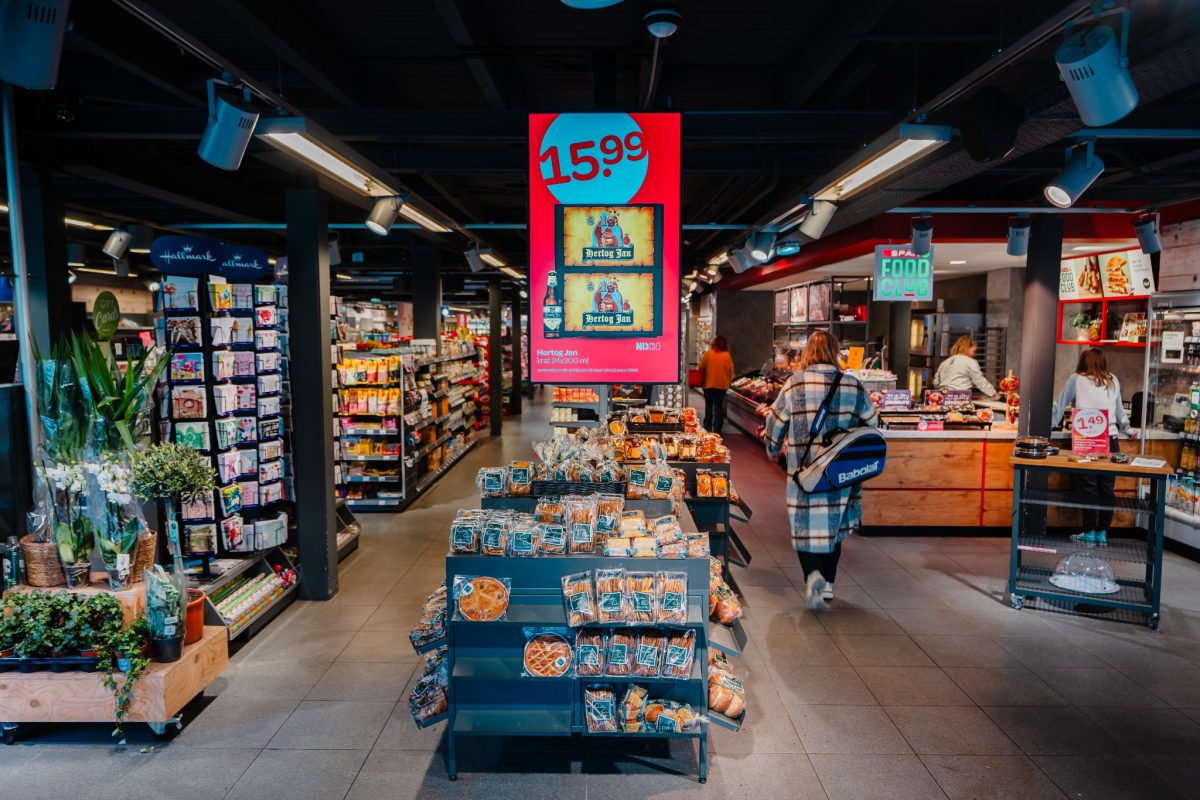
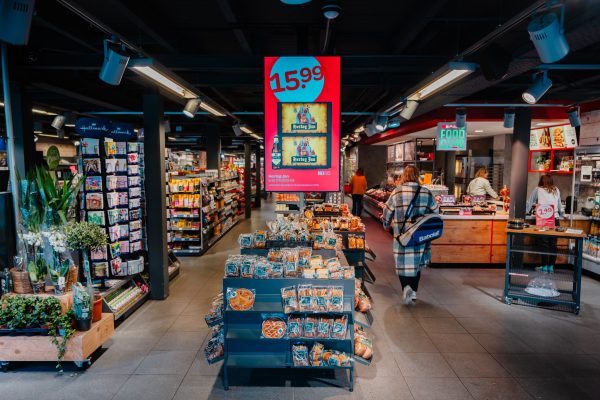
For RetailMedia.One, this idea formed the basis for deploying the Shell Station Takeover. With a Shell Station Takeover, all digital screens at the station are activated simultaneously. Rather than creating a single contact moment, the campaign delivers a sequence of contact moments throughout the entire customer journey. The commercials used were 10 seconds long. This high contact frequency, combined with longer commercials, is particularly effective at influencing the middle of the marketing funnel. Metrics such as campaign recognition, ad recall and brand consideration often show the strongest increases as a result.
There was a second interesting factor. The campaign followed directly after the media-intensive period surrounding the Curaçao national football team. As a sponsor, Corendon had already built up considerable visibility through television and online media. The question was therefore not only what the campaign at Shell stations would contribute on its own, but also how much additional impact could be achieved by combining it with TV and online. In other words: is there media synergy? At the same time, this campaign provided the perfect opportunity to use NORM, together with Motivaction, to investigate the contribution of the Shell environment to the overall cross-media campaign.
The three hypotheses
The campaign was based on three clear hypotheses:
- The Shell audience is an above-average match for Corendon’s target audience.
- A Shell Station Takeover primarily increases Corendon’s mid-funnel impact.
- The campaign at Shell stations and regular media reinforce one another, making the total campaign more effective than either one individually — in other words, creating synergy.
The research
After the campaign, Motivaction conducted research among 559 respondents from its STEMPUNT panel. In addition to questions about brand perception and campaign recognition, respondents’ media behaviour, visits to Shell and appreciation of the campaign materials were also measured. Respondents were divided into groups based on both their media consumption — high or low exposure to TV and online — and their visits to Shell. This created different exposure groups that could be compared directly. As a result, it became possible to measure the individual contribution of the retail environment on the one hand and television and online media on the other, as well as to determine whether the two reinforced each other. In other words, the research measured not only whether a campaign works, but also which channel is responsible for which effect. NORM processes Motivaction’s fieldwork data and performs 14 specific and standardised analyses. These analyses are presented within seconds in a clear report.
And ultimately, what matters most?
The results.
The right target audience
The first hypothesis was immediately confirmed.
Shell visitors are 3.4 times more likely to prefer Corendon than the average Dutch consumer aged 18–65. Brand preference is a particularly strong indicator in this respect, because it is hardly influenced by a short-term campaign. It mainly tells us something about the quality of the reach. And for Corendon, that quality proved to be exceptionally high.
The Shell environment primarily drives the mid-funnel
As expected, the strongest effects were found in the middle of the funnel. Campaign recognition more than doubled, increasing by 105%, while ad recall rose by 67%. This also shows that the campaign at the stations did not operate in isolation. Part of the high recall score was also driven by exposure to TV in particular. The hypothesis therefore remains valid. But that is not the whole story.
Lower in the funnel, the campaign also demonstrated clear impact. Consumers who visited a Shell station during the campaign showed 25% higher brand consideration for Corendon holidays than consumers who were not exposed to the retail media element of the campaign. That was particularly good news for Dick. Although his main focus is on brand strength, he also considers the overall accountability of media spending.
And that brings us to perhaps the most important conclusion.
The power lies partly in the combination: synergy
The combination of the Shell campaign with above-average exposure to TV and online media proved demonstrably more powerful than either channel individually. Respondents who were reached intensively through mass media and also visited a Shell station showed the highest brand metrics. But even groups with lower TV or online exposure combined with Shell exposure still achieved significantly higher results than consumers with very high exposure to TV and/or online alone. It is therefore clear that, within this campaign, retail media delivered the highest brand metrics.
Across the entire marketing funnel, the use of the Shell environment generated approximately 35% additional campaign impact. At the same time, television and online media also made the campaign at the station more effective. This mutually reinforcing effect amounted to approximately 17%. That interaction is essentially “found impact”, impact that can only be achieved by combining media. Overall, the use of the retail environment delivered an average of 3.5 percentage points of additional brand lift per individual metric across the entire funnel, covering seven metrics in total.
These findings are therefore highly valuable for the Dutch retail media industry as a whole. They provide a highly detailed picture of the direction modern marketing is taking, and of why reach and impact need to be distinguished more clearly when planning media and allocating budgets.
Conclusion
The Corendon case demonstrates that the value of a retail environment extends far beyond an additional contact moment. Within a highly relevant context, a brand can reach consumers who are already close to the category. This not only increases campaign recognition, recall and brand consideration, but also strengthens the impact of television and online media. Retail media is therefore not an alternative to mass media. The greatest value lies precisely in the combination: it is not about whether television works, or whether a Shell campaign works, but about how the two can demonstrably reinforce one another.
As Marcel Vogels, Director of NORM, puts it:
“Marketers still think in channels too often. Consumers do not. They experience one brand at different moments throughout the day. That is precisely why the context in which you reach someone is at least as important as the reach itself. This case shows that a retail environment, when activated with a strong proposition, does not sit alongside television and online media, but demonstrably increases their impact.”
What’s next
The target audience fit, the impact and synergy of the campaign, and the resulting accountability for both brand and business have led to a broader strategic partnership. At RetailMedia.One, we are pleased to support Corendon with additional opportunities to strengthen its brand through the expansion of Shell’s screen network, innovation through loyalty programmes and powerful in-store activations. Beyond the business results, it was also a great pleasure to work with a professional like Dick.
Read the full article marketingtribune.nl here.